Description
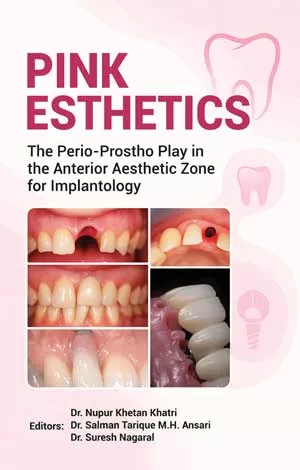
Pink esthetics represents the delicate harmony between the soft-tissue framework and the prosthetic restoration that defines the beauty of a natural smile, especially in the anterior implant zone. As explained in the opening pages of the book Pink Esthetics (pp. 5–8), implantology has evolved from a purely functional discipline into a blend of science and artistic precision, where the gingiva becomes as important as the crown itself. The soft tissues—papillae, gingival contours, and mucosal architecture—form the “pink frame” that determines whether an implant truly looks natural.
Achieving this harmony requires interdisciplinary coordination between periodontists, who shape the biological foundation through grafting, bone preservation, and tissue management, and prosthodontists, who design emergence profiles, abutments, and crowns that guide and support tissue form. The text emphasizes that even with digital workflows, guided surgery, and advanced materials, esthetic excellence still depends on a clinician’s artistic eye and biological sensitivity. Ultimately, pink esthetics is described not just as a clinical goal but as an emotional aspiration—restoring a smile that feels natural, confident, and in seamless continuity with the patient’s identity.