Description
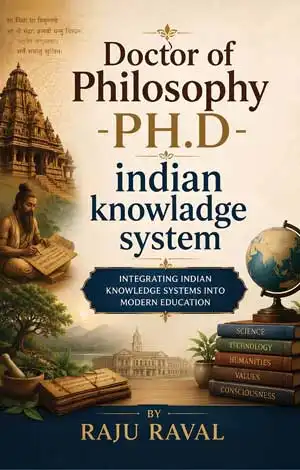
Integrating Indian Knowledge Systems into Modern Education by Raju Raval explores the relationship between India’s diverse knowledge traditions and the needs of modern education. The study examines Indian Knowledge Systems (IKS) not simply as historical heritage, but as a source of ideas that may inform contemporary approaches to learning, curriculum design, teacher-student relationships, holistic development, and educational transformation.
The book traces the historical development of Indian educational traditions, from Vedic and classical learning through medieval developments, colonial disruption, and post-independence efforts to reclaim and document indigenous intellectual traditions. It considers approaches such as the gurukula, dialogic learning, debate, reflective inquiry, integrative curricula, and continuous assessment, while comparing their principles with contemporary educational theories and practices.
A major focus is the challenge of translating these traditions into modern educational settings. The study addresses epistemological differences, colonial institutional structures, incomplete documentation, language barriers, teacher-training shortages, social and political concerns, and the need to distinguish credible knowledge from unsupported claims. It argues for an approach that is neither uncritical adoption nor wholesale rejection, but one grounded in scholarship, dialogue, critical inquiry, and educational purpose.
The book’s central contribution is the Integrative Educational Transformation (IET) Framework, which operates through epistemological, curricular, and pedagogical transformation. It offers practical directions for curriculum reform, teacher education, institutional redesign, assessment, and quality assurance.
An insightful resource for educators, teacher educators, curriculum developers, policymakers, researchers, and readers interested in educational decolonization and Indian intellectual traditions, this book presents a thoughtful framework for considering how different ways of knowing can engage constructively in the future of education.