Description
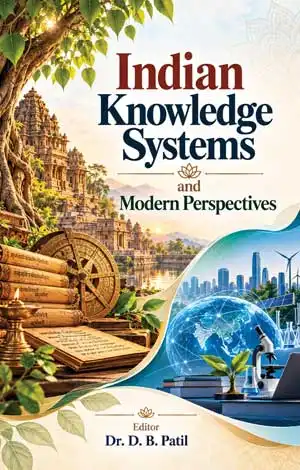
Indian Knowledge Systems and Modern Perspectives, edited by Dr. D. B. Patil, is a multidisciplinary academic volume exploring India’s diverse intellectual heritage and its connections with contemporary knowledge, research, and education.
Bringing together scholarly contributions from academics and researchers, this book examines traditional Indian knowledge across a wide range of subjects. It explores the historical foundations of Indian Knowledge Systems (IKS), their role in higher education, and their integration into contemporary curricula under the National Education Policy (NEP) 2020.
The book covers traditional agriculture, indigenous farming practices, food preservation, nutrition, fermentation, environmental sustainability, water management, biodiversity conservation, Ayurveda, and medicinal plants. It also examines ancient Indian contributions to chemistry, metallurgy, materials science, and technological practices, highlighting opportunities to study historical knowledge through modern scientific approaches.
Beyond science and sustainability, the volume addresses classical Indian music, dance, painting, human rights, traditional legal thought, social justice, and the protection of traditional knowledge through intellectual property rights. Topics such as biopiracy, benefit sharing, and the Traditional Knowledge Digital Library further highlight the importance of preserving and responsibly managing India’s collective intellectual heritage.
A key strength of this collection is its interdisciplinary approach, connecting historical traditions with contemporary academic inquiry. It encourages readers to examine traditional knowledge critically, consider relevant evidence, and explore potential applications through systematic research rather than relying on assumptions.
This book is a valuable academic resource for university students, research scholars, faculty members, educators, and professionals interested in Indian Knowledge Systems, cultural heritage, sustainability, and interdisciplinary studies. Whether used for teaching, research, or independent study, it offers a broad foundation for understanding how India’s knowledge traditions can inform present-day academic discussions and future research.